
Repair Guru
近日発売


About the game
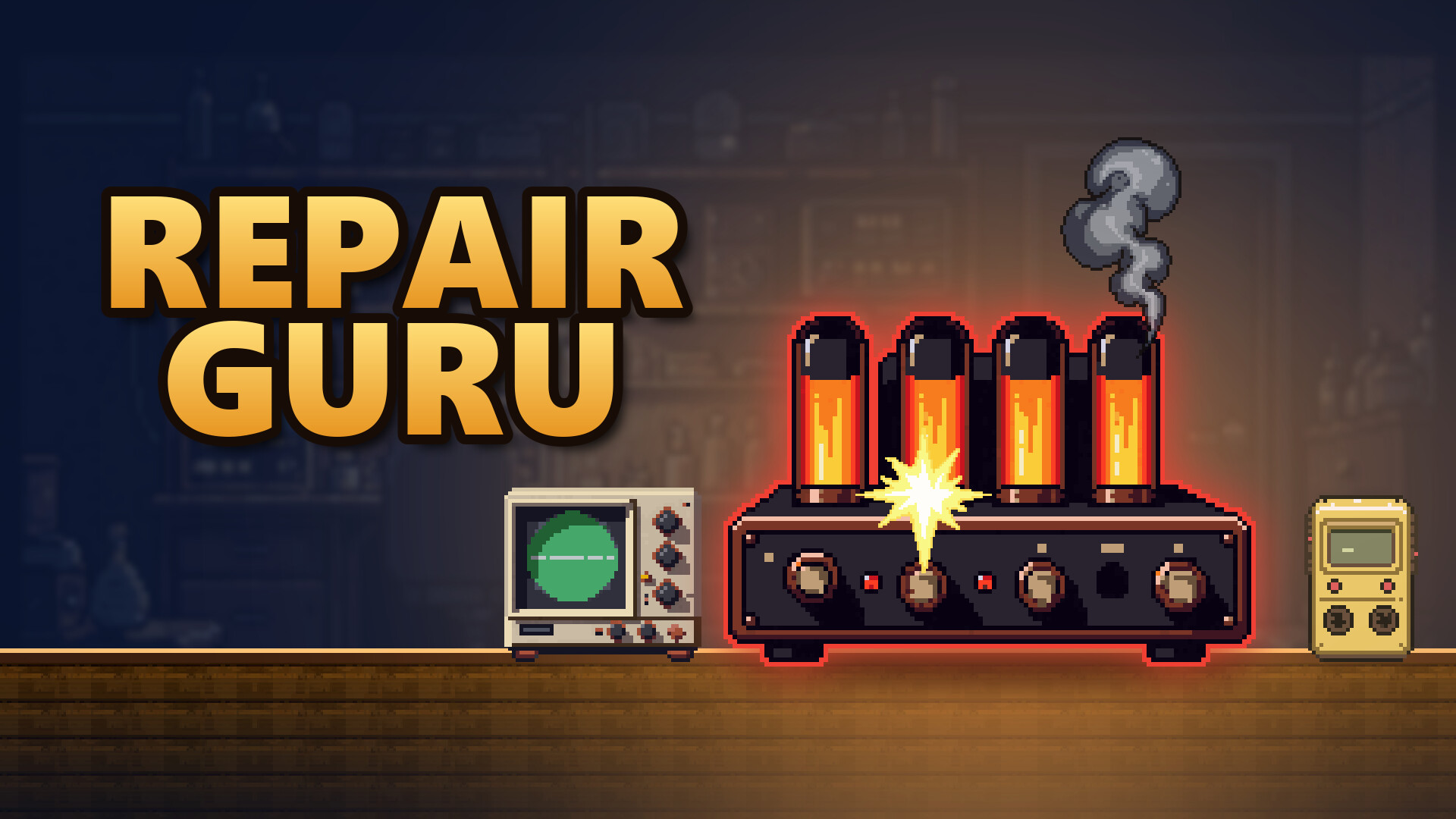
1970年代の電子機器修理店を本格的にシミュレート。決められた筋書きは一切なく、すべての故障は実際に部品が不調を起こしているために発生する。原因を見つける唯一の方法は、機械の電源を入れ、十分に暖まるまで待って測定すること。回路を半分ずつ切り分け、残った範囲をさらに半分に絞り込め。修理して返却し、直ったままであることを祈ろう。
Steamの原文説明
Nothing on the bench is scripted
A machine that comes in is a real circuit, built out of real components, withsomething genuinely wrong with one of them. There is no hidden answer and no
list of steps. There is a resistor that has drifted, a capacitor that has gone
leaky, a solder joint that lets go once the board is warm — and the reading
your meter gives you is what that circuit would actually do.
Twenty-six machines, from a desk lamp to a home organ. Twenty-seven kinds of
component. Five hundred and fifteen different things that can be wrong, and
every one of them can be found and fixed.
Halve the chain, then halve what is left
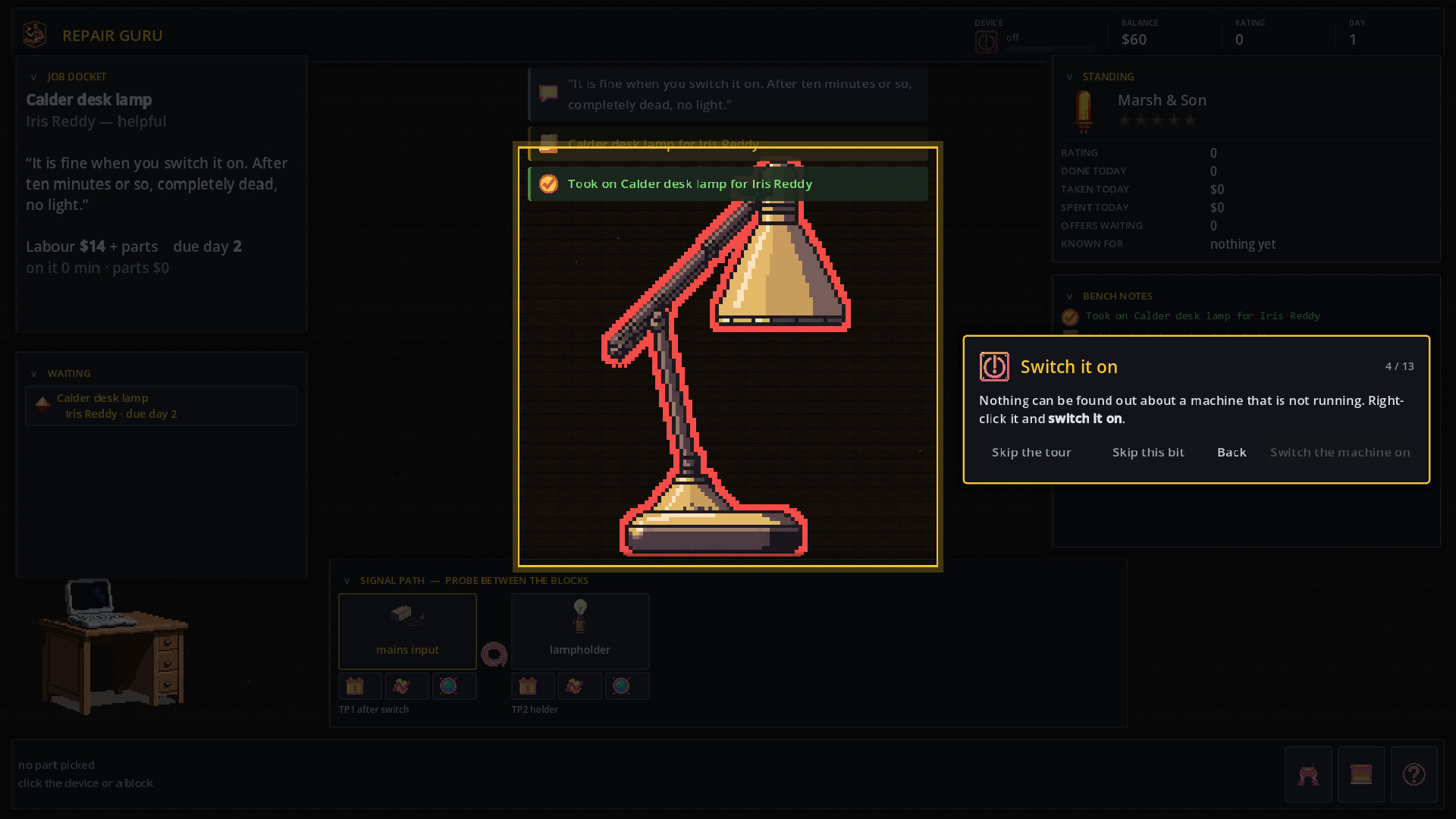
Every machine is a chain of blocks with a test point between each pair. Fullsignal at one point and nothing at the next means the fault is in the block
between them. Probe in the middle rather than at the end, and every
measurement halves what is left to search. That is the whole method, and the
game never does it for you.
Most faults are shy
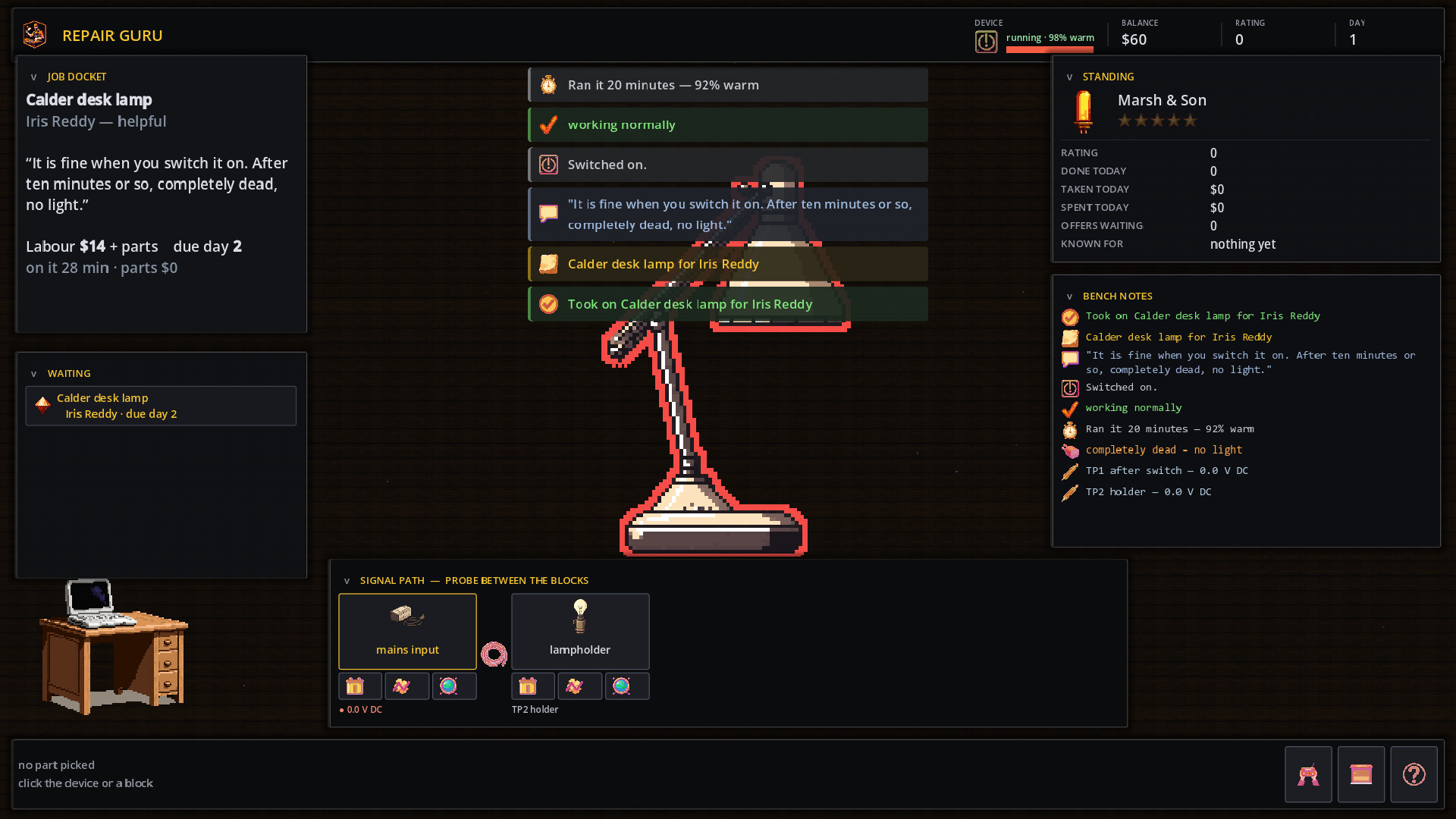
A dry joint is perfect cold and lets go at eighty per cent warmth. A worncontrol only crackles while somebody is turning the knob. A cracked track
needs a knock. Half the faults in this trade do not exist until you switch the
machine on and leave it running — so you watch it, listen to it, and put the
thermal camera on it.
The machine on the bench shows you what it is doing. It stutters, it goes
feeble, it smokes. What you hear is mixed live from the same readings the
notes are written from, so it is evidence rather than decoration.
Find the fault before you buy the part
Anyone can replace a circuit board one component at a time, and everyone whodoes it goes broke doing it. Parts come out of a drawer that starts nearly
empty. A day is seven hours and every action spends some of them. Wages come
out of the till in the morning whether the day earned them or not.
Reputation is slow to earn and quick to lose: two points for a clean repair,
nine off for one that comes back. So test it warm, test it cold, knock it, and
only then hand it over.
The other half of the trade
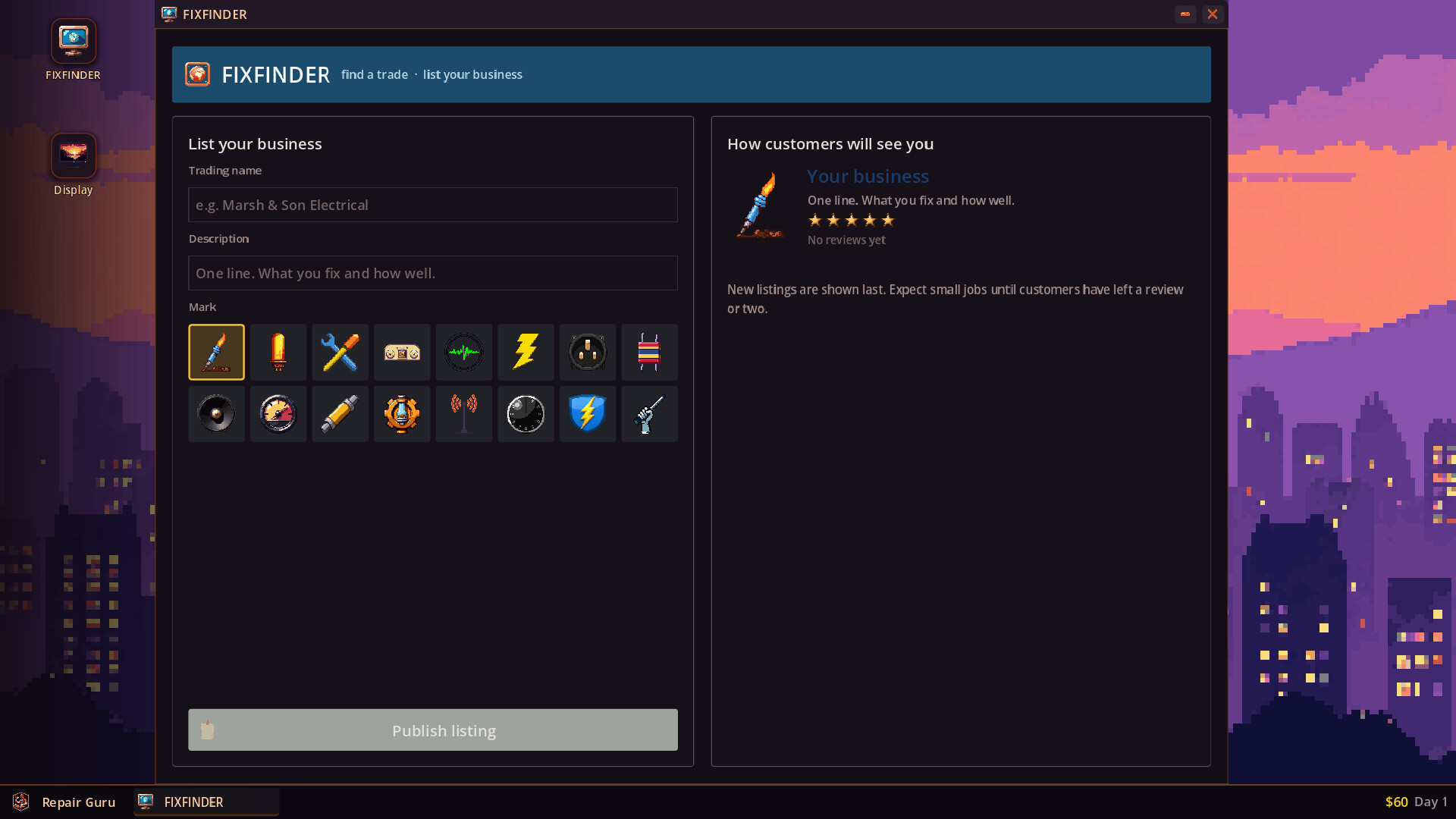
Buy them broken, mend them, sell them on. There is a salvage yard full ofhouse clearances described the way the seller sees them, which is to say
badly. There is a shopfront, a licence that says how much you may list, and an
advertising agency that will sell you search ranking by the week. What sells
is ranking and reputation multiplied together, which means the bench is still
the thing that matters.
And a shop to run
Kit that changes what can be known rather than what can be bought: a betterscope resolves one per cent instead of five, a logging meter reads every test
point in one pass, a bench supply takes "is it the mains?" off the table
either way. Three people you can put on the books, each of whom has to earn
their wages. A specialism that builds up in whatever you spend your days on,
and brings you more of it.
The details
- Everything drawn, animated and scored for the game
- English, German, Turkish, French, Italian and Spanish
- No microtransactions, no online requirement, no launcher
- Runs on a potato — it is a dozen small animations over a still picture
体験版と発売について
現在の確認データでは体験版の存在を確認できていません。過去にも体験版がなかったという意味ではありません。最新の提供状況はSteamのゲームページで確認してください。
情報・画像:Steam · 最終確認 UTC