
CENTAVO
Есть демоверсия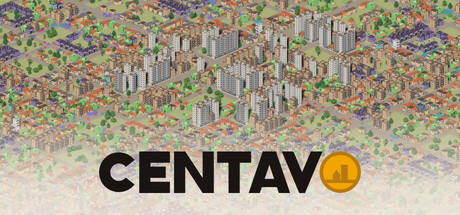


About the game
Градостроительный симулятор, где деньги никогда не берутся из ниоткуда. Десятки тысяч жителей, каждый со своим именем, работой и кошельком. Вы прокладываете улицы, распределяете зоны и устанавливаете налоги; они покупают участки, открывают предприятия и уезжают, если заканчивается работа или еда. Превратите лагерь в мегаполис.
Оригинальное описание в Steam
Every cent is in someone's pocket
CENTAVO is a city sim that starts from scratch: empty land, nobody living on it and a fixed amount of money in the world. You lay the streets and decide what can exist on each lot. The city grows to tens of thousands of residents, and every one of them is a person, with a name, a job, a family and their own money in their pocket. Nothing comes from nowhere: for someone to be paid, someone has to pay. And you watch it happen.A city of people, not numbers
Click any resident and follow their life. They walk to work, buy food at the market and pay rent to whoever owns the house. Their children walk to school, eat the school lunch and study, and those who studied are more productive at work. Residents fall ill and pay the hospital, marry, grow old and die. The house passes to the spouse or the children; with no heir, the business passes to someone who worked there.Not every story ends well. Someone with no job and no money may turn to theft; the police station locks them up, and whoever goes to jail loses their job. Those who find neither work nor food leave, and take their money with them. Those who arrive from outside come because there was a job that paid and a roof they could afford.
You zone. The residents build.
You zone the lots as Housing, Leisure, Production or Commerce and Services. Whoever buys the lot and opens a house, a market or a factory is a resident with money and an idea. If the business can't make the numbers work, it closes, and you demolish and zone again.- Building consumes real materials. With a materials factory and a hardware store, construction happens here, by a crew of residents, with hired hands from outside when they run short. Without them, the building comes prefabricated from outside, at a higher price, the public coffers pay while they can, and that money leaves the city.
- The city grows and the game grows with it. The hospital and the sports court arrive in the Village; apartments, the plaza and the school in the Town; tower blocks, the police station and the theater in the City; the stadium in the Capital.
- Leisure matters. The government keeps plazas and courts running by contract; theaters and stadiums live on tickets. A city with no leisure is an unhappier city.
- Expropriate buys a resident's house above market price and rehouses the family before the demolition. If there is nowhere for them to go, the family refuses.
Money never comes from nowhere
The amount of money in the world is fixed: nobody prints it, nobody erases it. The wage a resident takes home came out of the market's till, which came out of a customer's pocket, which came out of another wage. Every payment has someone who pays and someone who gets paid, and you can see both.Govern through the pocket
The town hall's coffers live on taxes, fines and the sale of lots and houses, and they can only spend what came in. You decide how much to charge and whom: wages, profit, dividends, rent, sales, wealth, inheritance and property. You can exempt whoever you want to protect, like the elderly, families with children or food. With that money, you switch on programs: an income floor for those left with nothing, insurance for those who lost their job, aid for whoever supports a child and a pension at the age and amount you choose. Whoever retires leaves their job, and the opening goes to someone else.Every choice has a pocket on the other side. Tax too much and residents pack their bags. Tax too little and the coffers run dry, imported construction stops and the programs stop paying. Fall behind on property tax and you can lose the house.
Prices nobody programmed
The market buys from the farm and sells to residents, and the price reacts to the shelf and to the till: an empty shelf gets pricier, idle stock gets cheaper. Rent floats too: owners ask what they want, and newcomers turn down a house that costs too much. No price is set by decree, and the Prices tab shows the history of each one.Open anyone's pocket
- The record of any resident or building, with the complete statement, entry by entry. On every line, one click takes you to whoever paid or whoever got paid; click by click, you follow the chain of payments.
- Heat maps: Well-being, Wealth, Land value, Crime and Money flow, which lights up the blocks money is moving through.
- The city report, with 12 tabs going from population to businesses and the coffers' ledger, with series going back to day one.
- Floor plan layer: the city seen from above, like a blueprint, to read the streets behind the buildings.
From Camp to Metropolis
The city climbs seven steps: Camp, Hamlet, Village, Town, City, Capital and Metropolis. The steps unlock new kinds of construction, taxes and programs, and shows the next goal in residents, buildings and money. The money goal counts everything inside the city: in residents' pockets, in business tills and in the coffers. What went abroad doesn't count.And the city can end: by exodus, by starvation, or by coffers that ran dry and never recovered. When it ends, you can restart the same city, with the same seed, and try something else.
Made by one person
CENTAVO is made by a single developer. Everything described on this page is already in the game; what is still going to change is in the Early Access section.Информация о демоверсии и выходе игры
При последней проверке найдена демоверсия в Steam. Перед загрузкой убедитесь на странице Steam, что она по-прежнему доступна в вашем регионе.
Демоверсия Steam, тестирование и ранний доступ: в чём разница?
Информация и изображения: Steam · Последняя проверка UTC