
Will it Stand?
Demo disponible
About the game
¡Se avecina una catástrofe! Con un presupuesto limitado, construye estructuras, mecanismos y defensas para proteger a tu castor de terremotos, inundaciones, corrimientos de tierra, meteoritos y ataques enemigos. Refuerza, absorbe, desvía, defiende: no existe una única solución. Si sigue en pie cuando termine la catástrofe, es que ha funcionado.
Descripción original de Steam
Disaster strikes. How are you going to survive it?
The ground starts shaking.
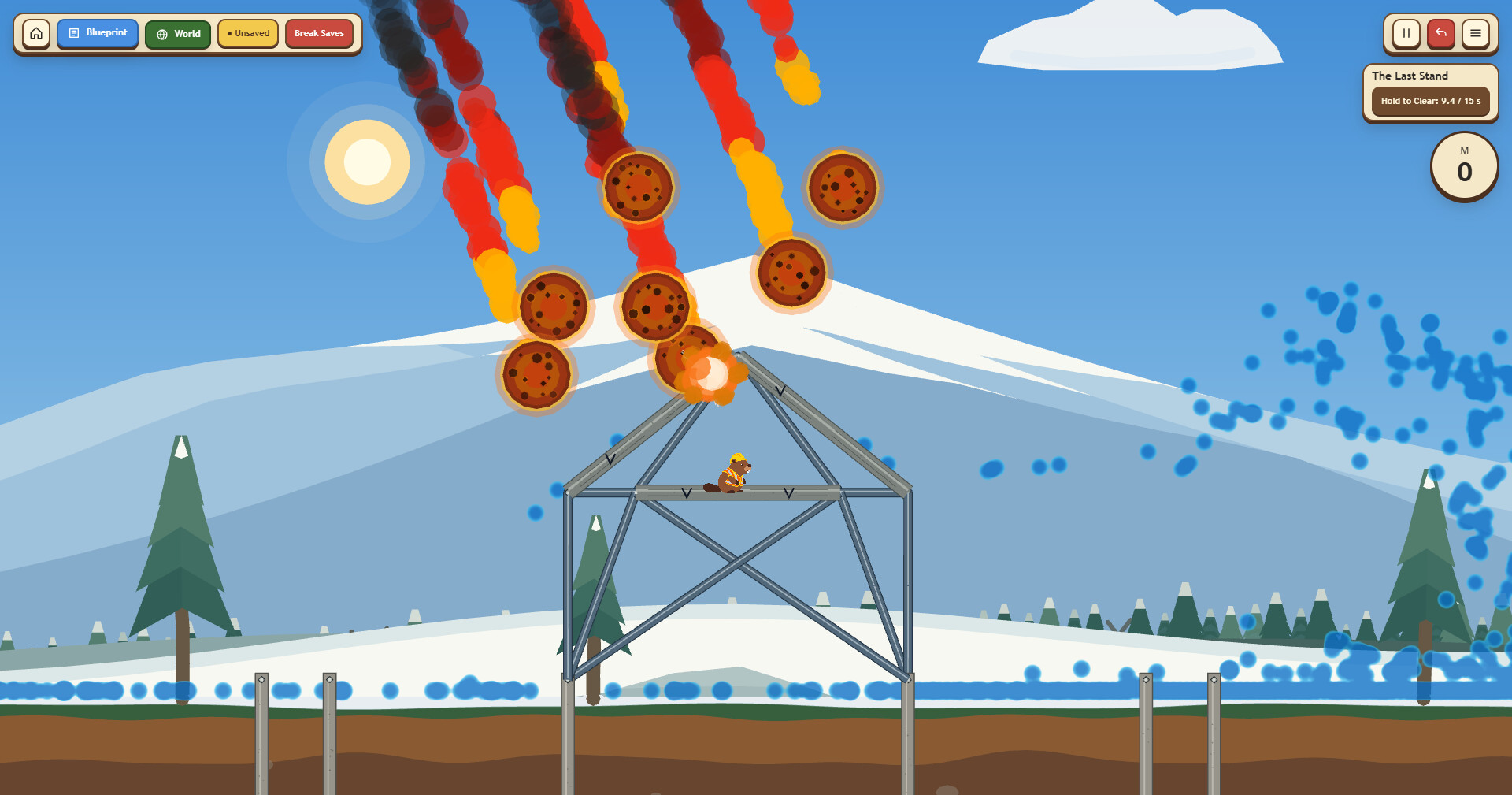
Then come floods, mudslides, and meteors falling out of the sky...
And some problems can even walk straight toward you.
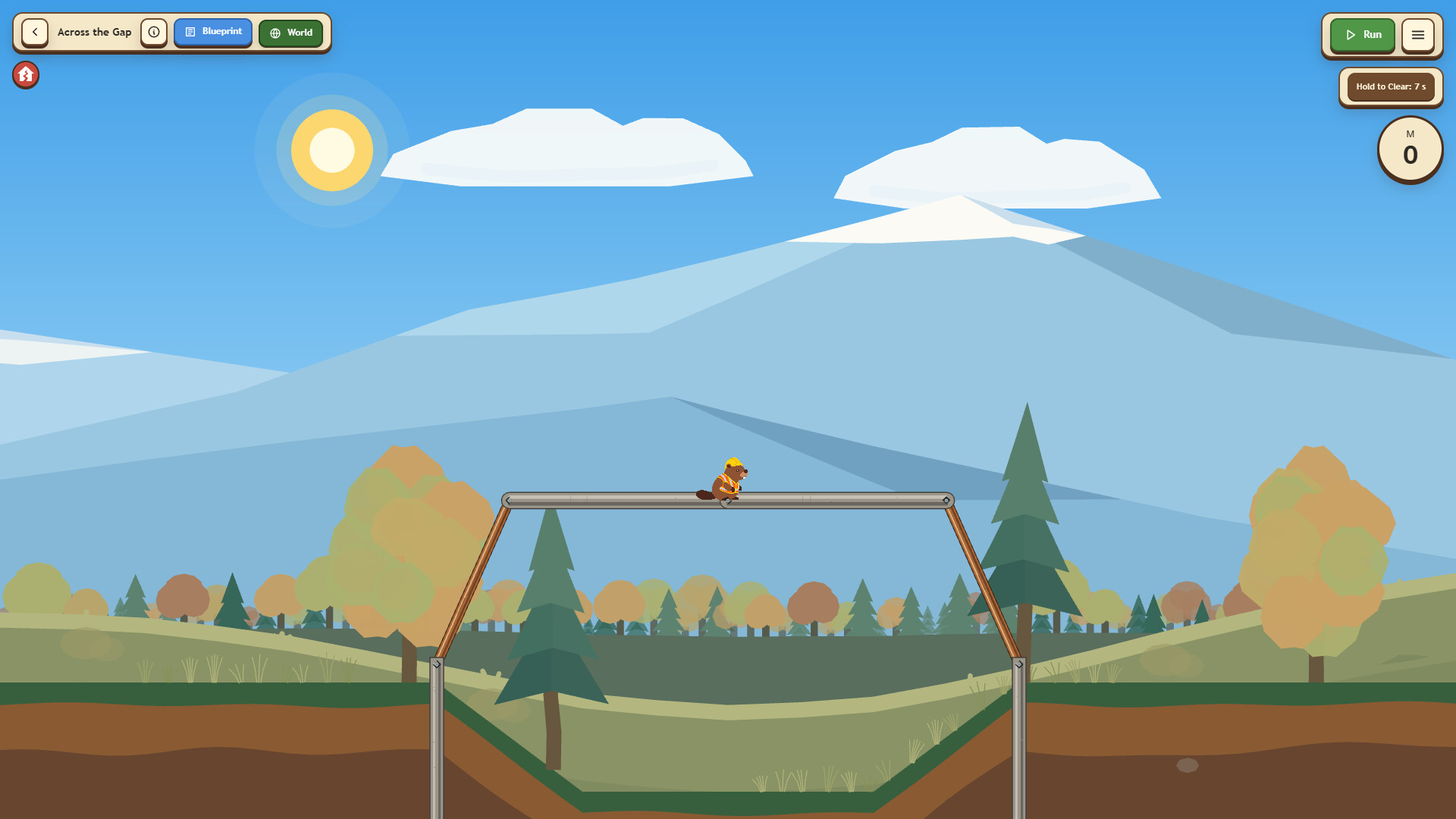
You have one job: use the materials and budget you have to build something that protects Mr. Beaver and the critical objectives.
How you do it?
Up to you.
Build it first. Then let disasters and enemies try to tear it apart
There is no correct answer here. You can build a ridiculously heavy fortress, or solve the whole problem with a few beams, some rope, and one clever support.
Take the hit head-on, or let the structure flex and shed the force.
Stop the flood, or redirect the water somewhere else.
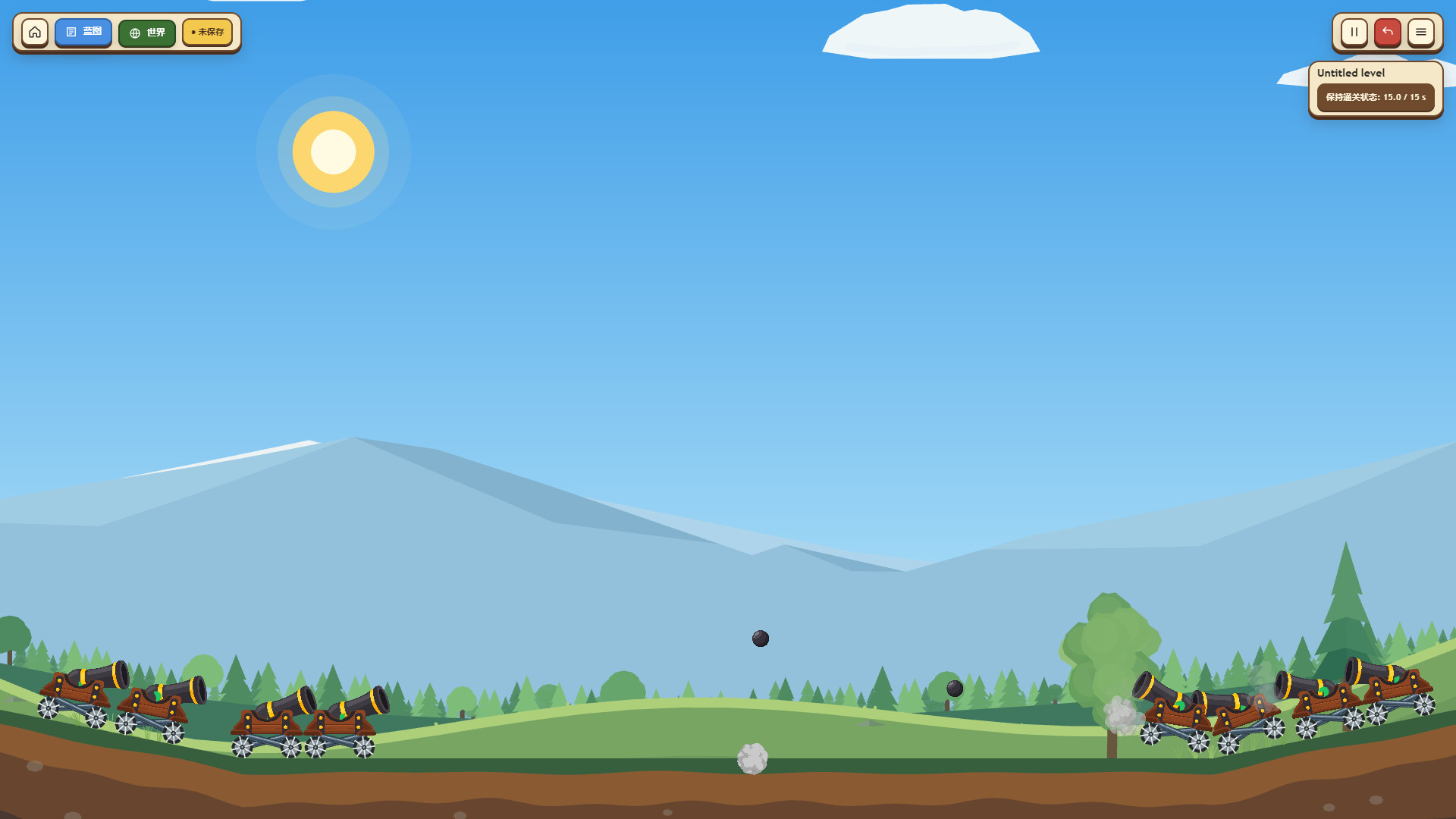
Build a defensive line and deny the attackers a path—but they are not going to stand around and wait for you.
They move, look for routes, and can smash through structures that block the way.
Different disasters, different problems to solve
Earthquakes keep pulling your structure back and forth.
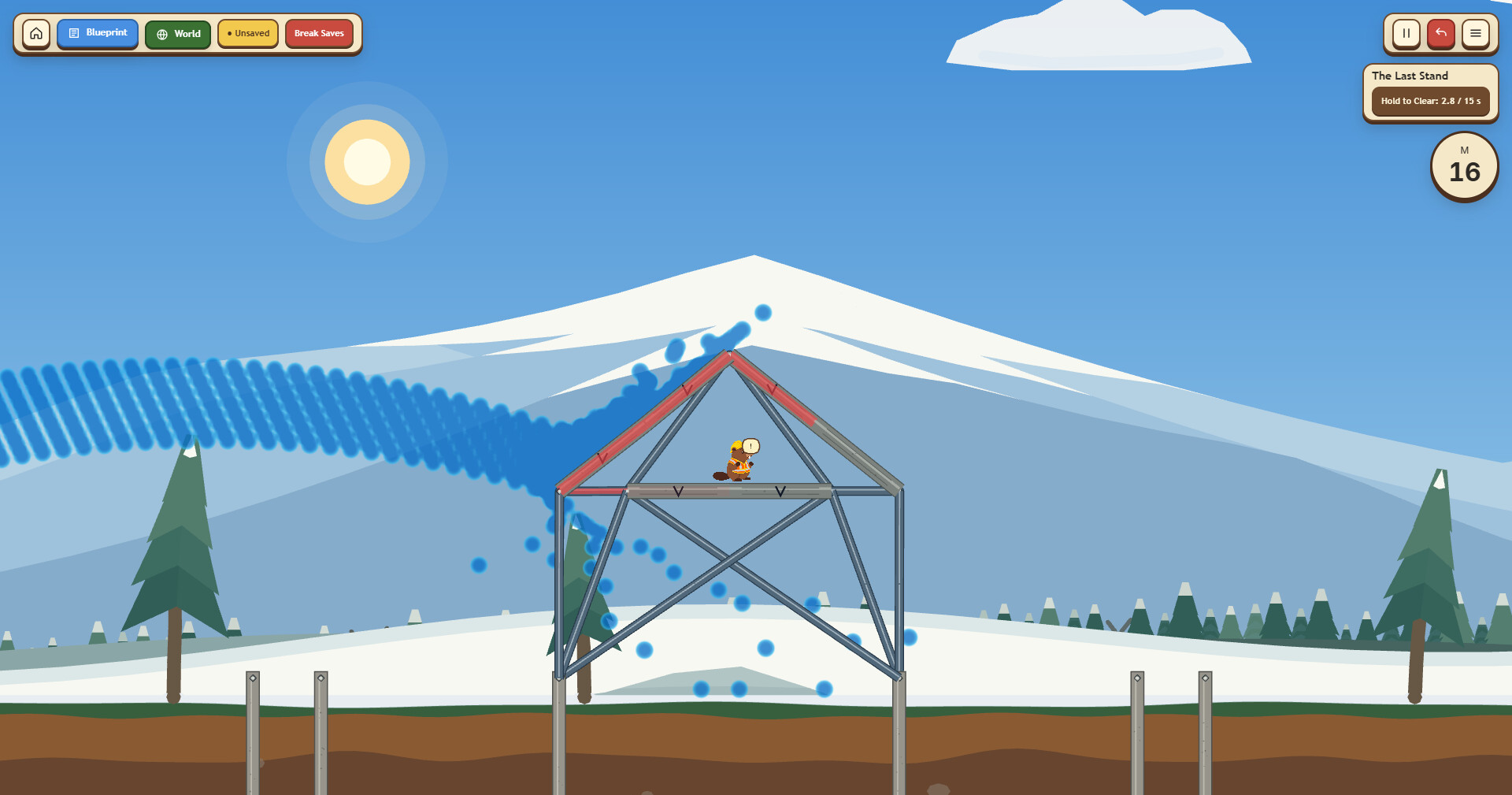
Floods and mudslides have real weight, flow, and impact. They can move around obstacles and transfer force into whatever they hit.
Meteors do not care how pretty your design is.
And active enemies can turn a once-safe structure into a frontline you actually have to defend.
Sometimes the toughest design is not the best one.
Let it move. Let it bend. Let it roll. Absorb the impact—or even sacrifice part of the structure on purpose. Any of that can work better than simply adding more material.
Turn your structure into a machine
Steel, wood, concrete, and rope are only the beginning.
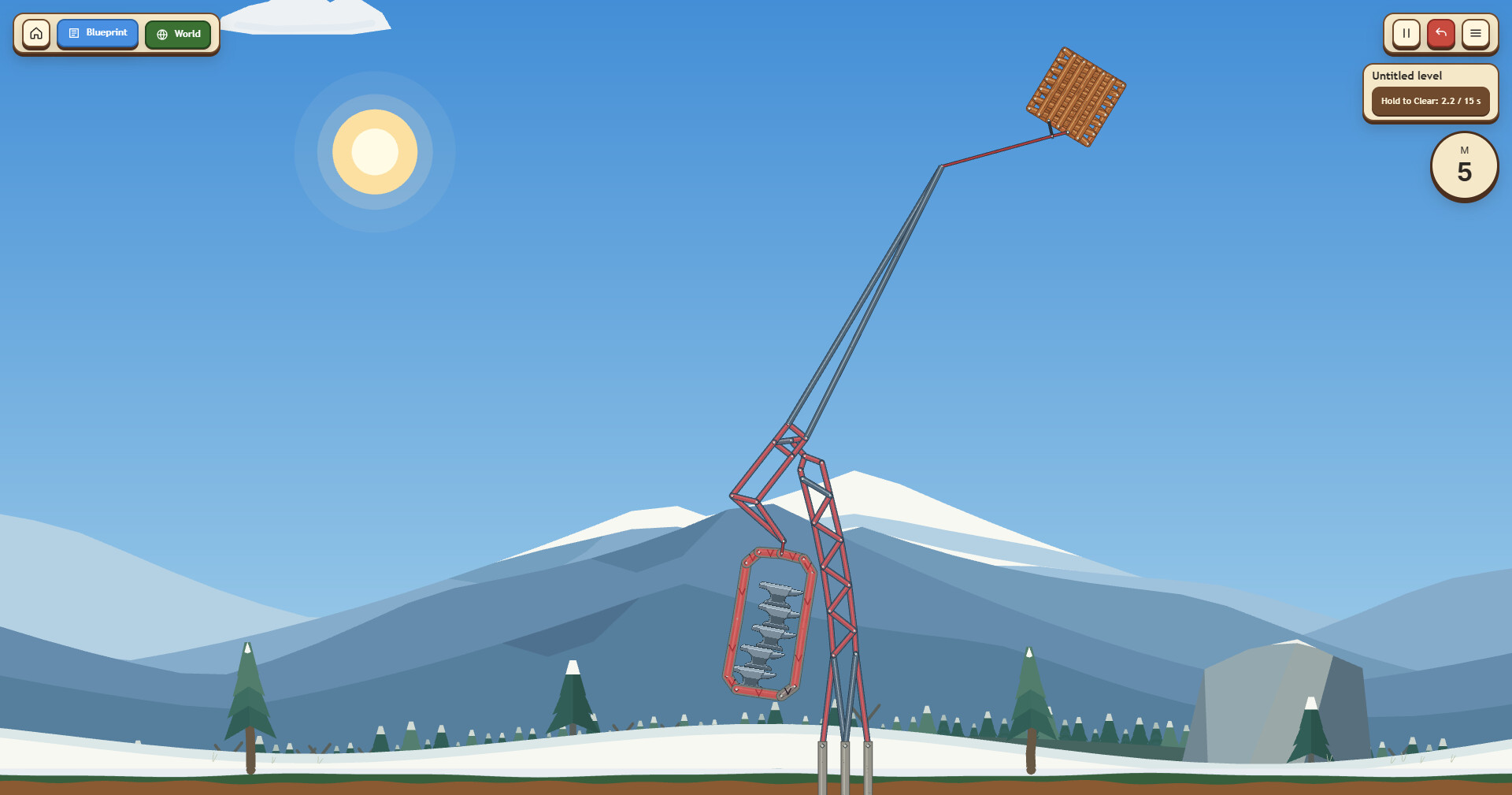
Wheels, springs, dampers, and more controllable or triggerable mechanical components mean your creation does not have to just sit there.
Make it move, cushion impacts, reel in and out, change state, or even react to what is happening around it.
A wall can just be a wall.
Or it can be one part of an entire defensive system.
Expensive is not always better. Weird is not always wrong
Your budget is always limited.
That means every beam, every piece of material, and every mechanism is a trade-off.
You can do the math and build a perfectly respectable engineering solution.
Or you can make something that looks like it absolutely should not work.
If you press Run and—
it actually survives,
then it is an answer.
Collapsed? Failed? Find out why
Where did the structure break first?
Which material could not take it?
Where did the flood get through?
How did the enemies reach Mr. Beaver?
Change one beam.
Move one support.
Save a little budget.
Try again.
Sometimes you only survive two seconds longer.
Sometimes that changes the whole solution.
Still not enough chaos? Make your own challenge
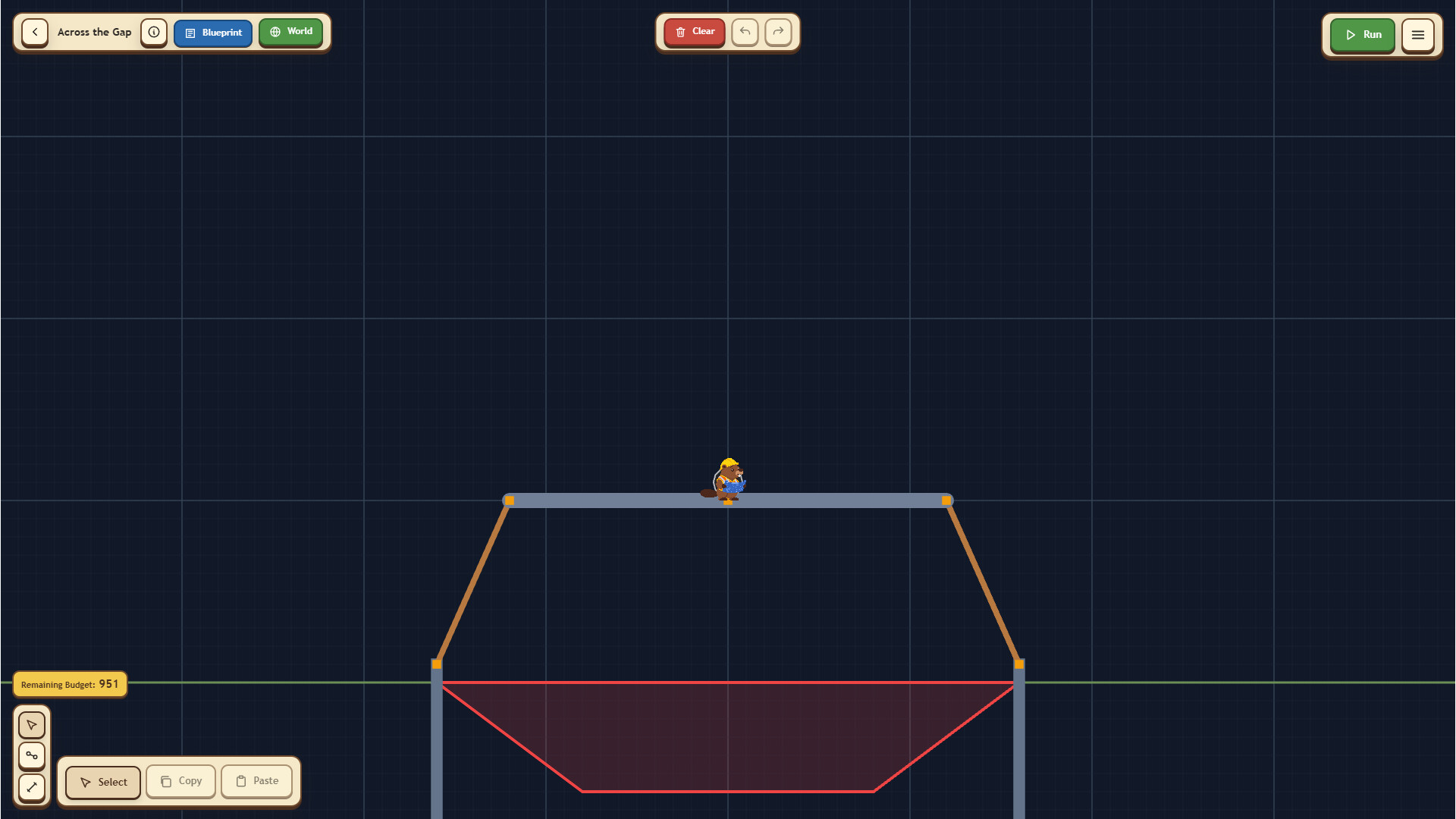
In the Level Creator, shape the terrain, define build areas, set objectives, then throw in disasters and all kinds of threats.
Make a serious engineering puzzle.
Or build a disaster scene designed specifically to ruin your friends.
Then watch people find ridiculous ways to beat the challenge you carefully prepared.
There is no single solution.
And nothing says your creation has to look like a “normal building.”
You decide everything.
Información sobre la demo y el lanzamiento
Se encontró una demo de Steam en la última comprobación. Antes de descargarla, confirma en Steam que sigue disponible en tu región.
Demo de Steam, prueba de juego y acceso anticipado: ¿cuál es la diferencia?
Información e imágenes: Steam · Última comprobación UTC