
TREUD
即将推出
About the game
在这款拥有鲜活模拟系统的大战略游戏中,统治你的社会,走过从石器时代至今的12,000年。真实的历史进程将在此重现,但一切都并非命中注定。建设、征服、榨取。危机是历史的一部分:守住权力,或投身革命。
Steam 原始说明
*treud- is proto-indo-european word means "to press, to apply force, to squeeze" which evolved in many forms including English "threat" or Russian "труд" (meaning labour/work)
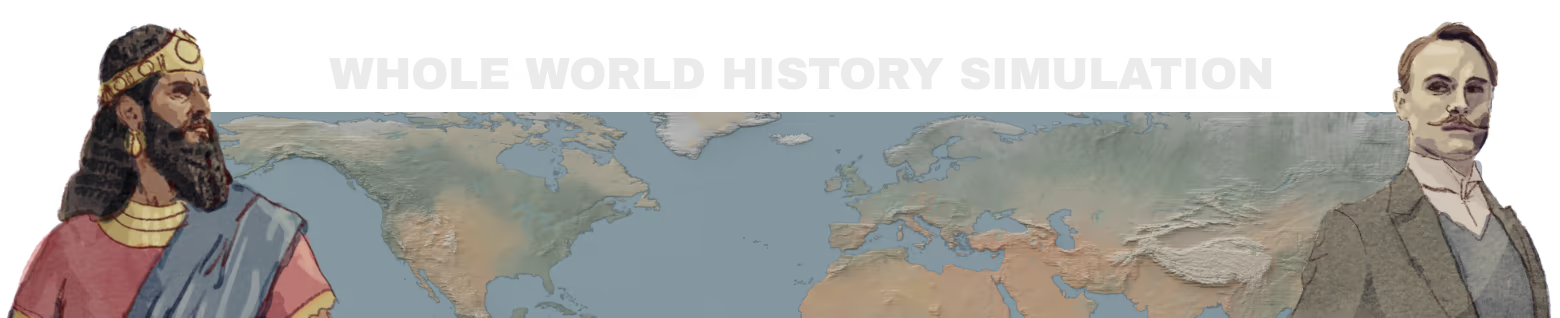
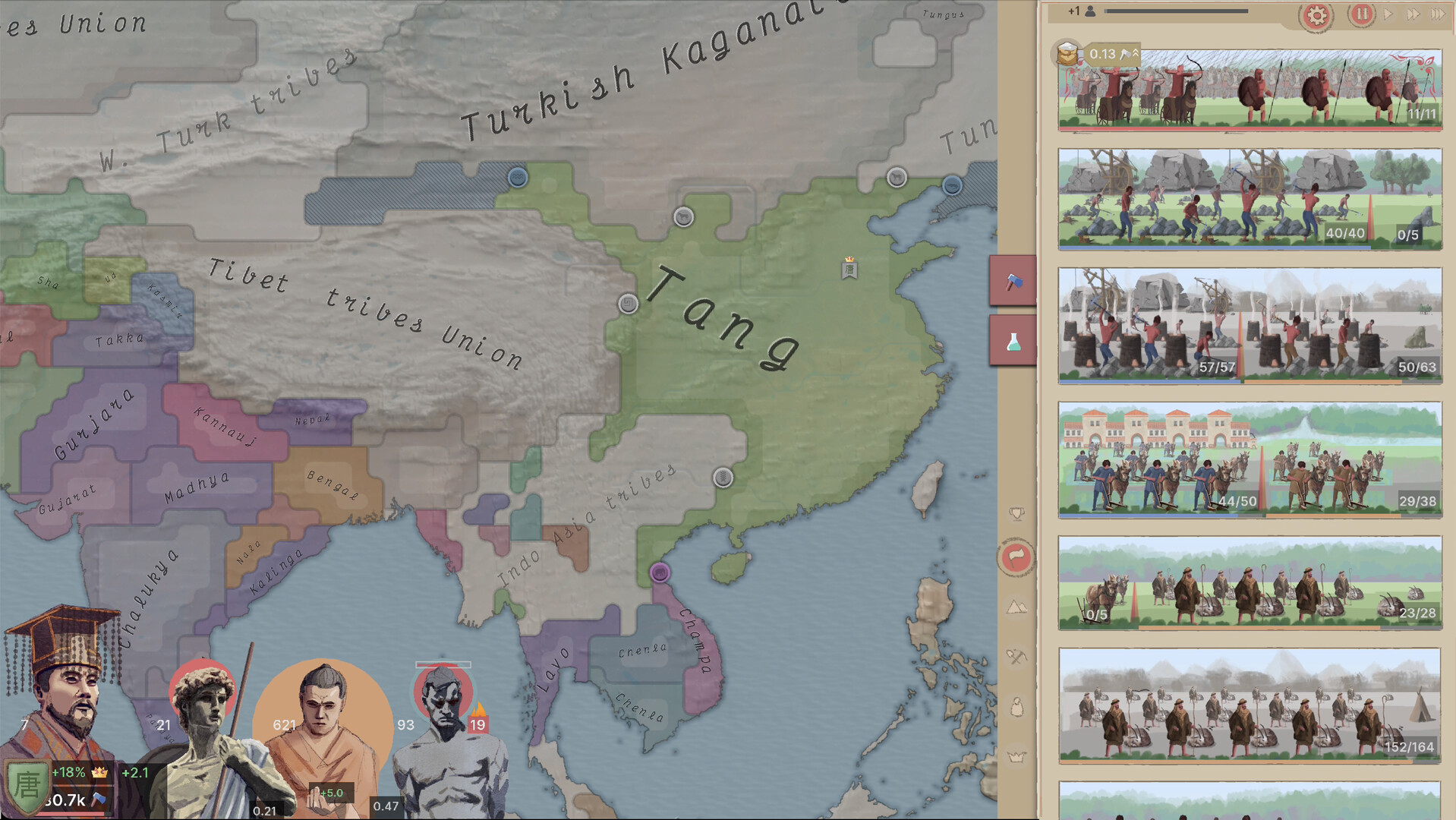
All game systems – production, society, control, war, and others – create a realistic simulation of the last 12,000 years of history (the Holocene), involving hundreds of tribes and states. The game broadly reproduces real historical processes: the formation and collapse of regional empires, technological development, population growth and revolutionary processes
For example, some kind of Mediterranean hegemon (like the Roman Empire) will likely emerge, but the development of iron and intensive agriculture in forested Europe will create a crisis and make the formation of a new empire there extremely difficult. Meanwhile, empires in China will form regularly
No scripts. Only systems
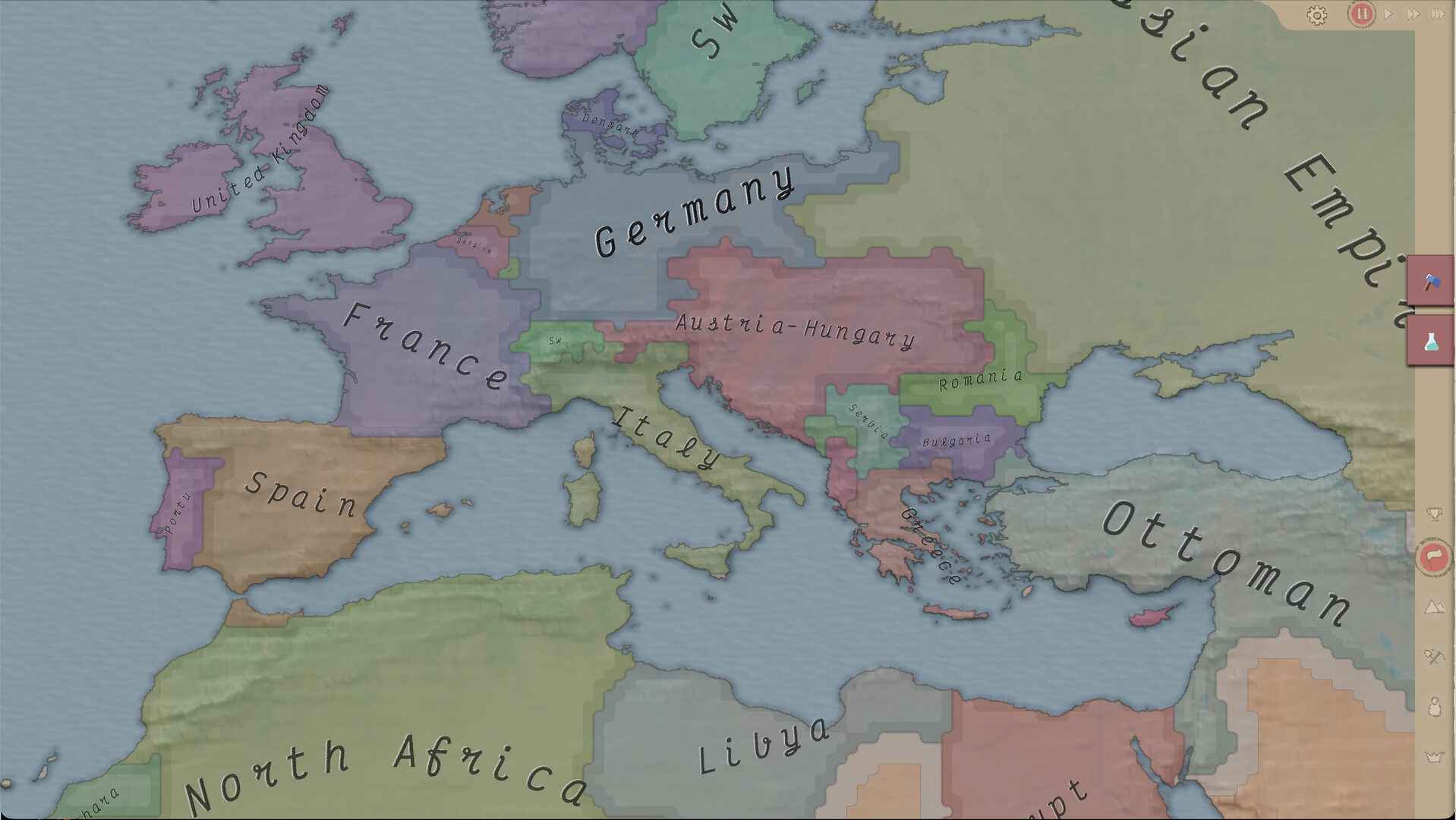
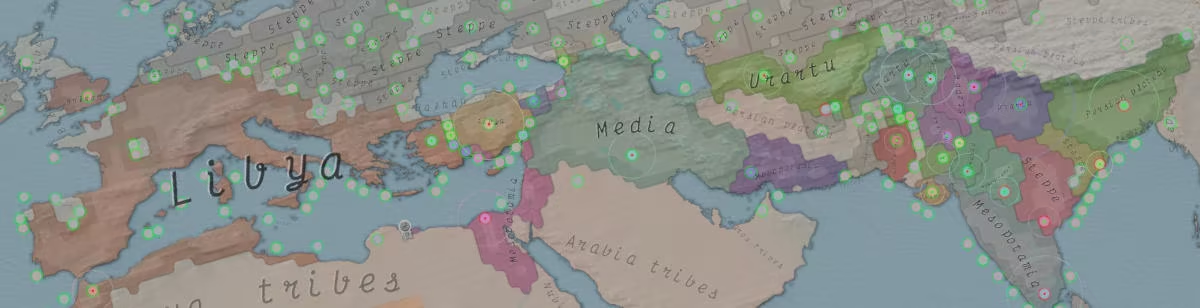 One of the results of a simulation from the Stone Age to antiquity. Isn't it beautiful?
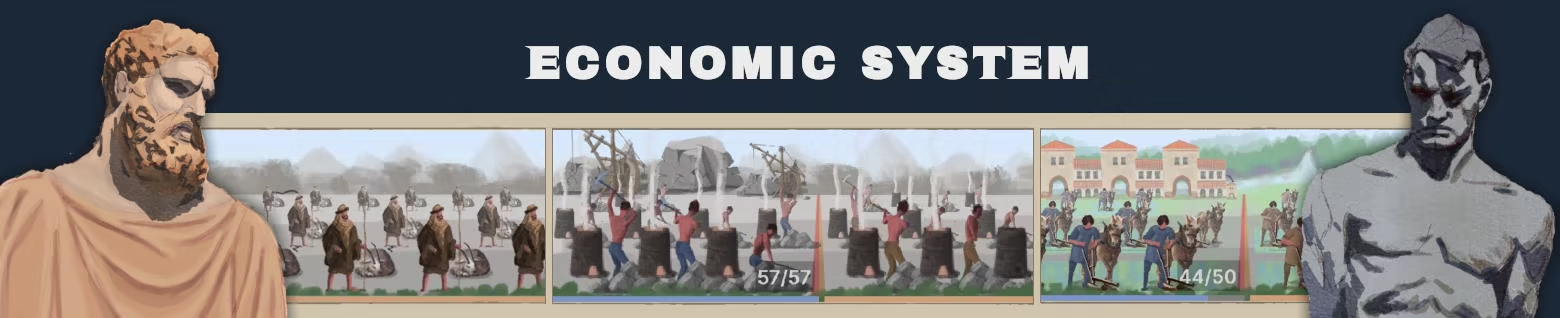
In the TREUD world there's a closed economy; nothing comes from nowhere: food, weapons, raw materials – everything is produced by people. The game simulates both national and global markets; products must find a consumer, otherwise, for example, the producer won't be able to exchange them for food for their slaves or wages for workers (although within tribes or in a planned economy, production is distributed outside the market)
There are no predetermined prices; they are determined by the model based on supply and demand, which are tied to the income of the population, the desire of the owners to maintain profitability, etc
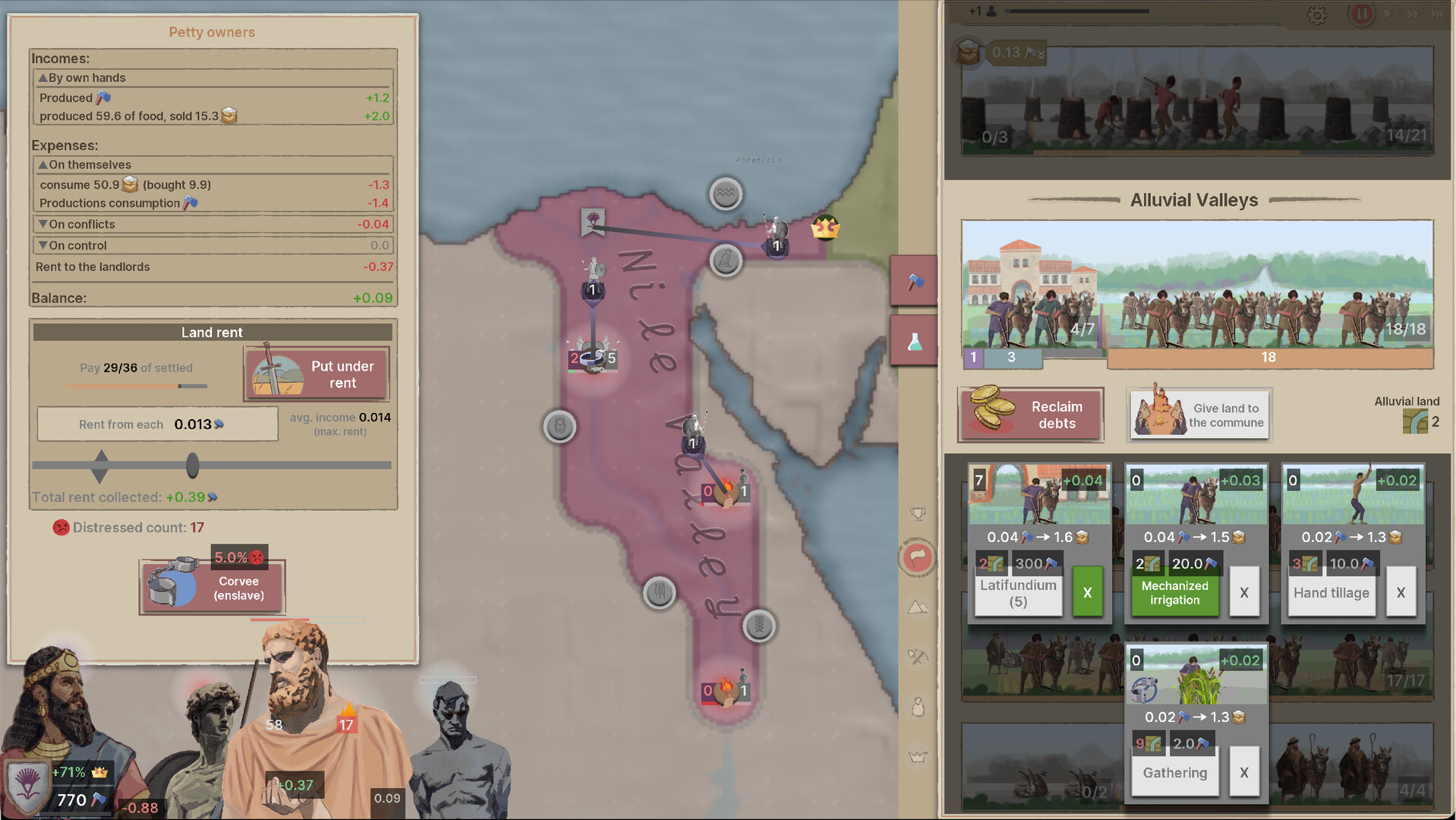
The player, acting as the ruling class, can build workplaces or take them away from other owners who are building on their own. Don't forget to find the labor force
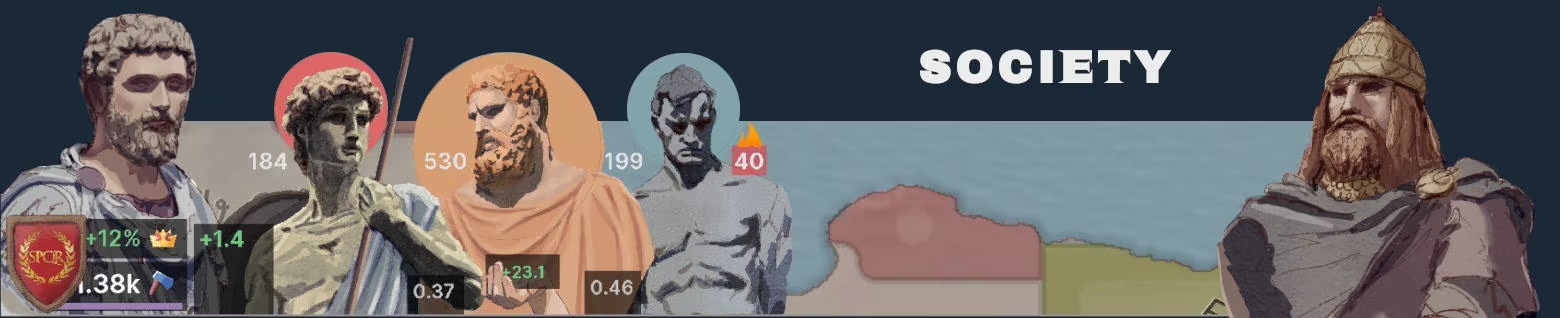
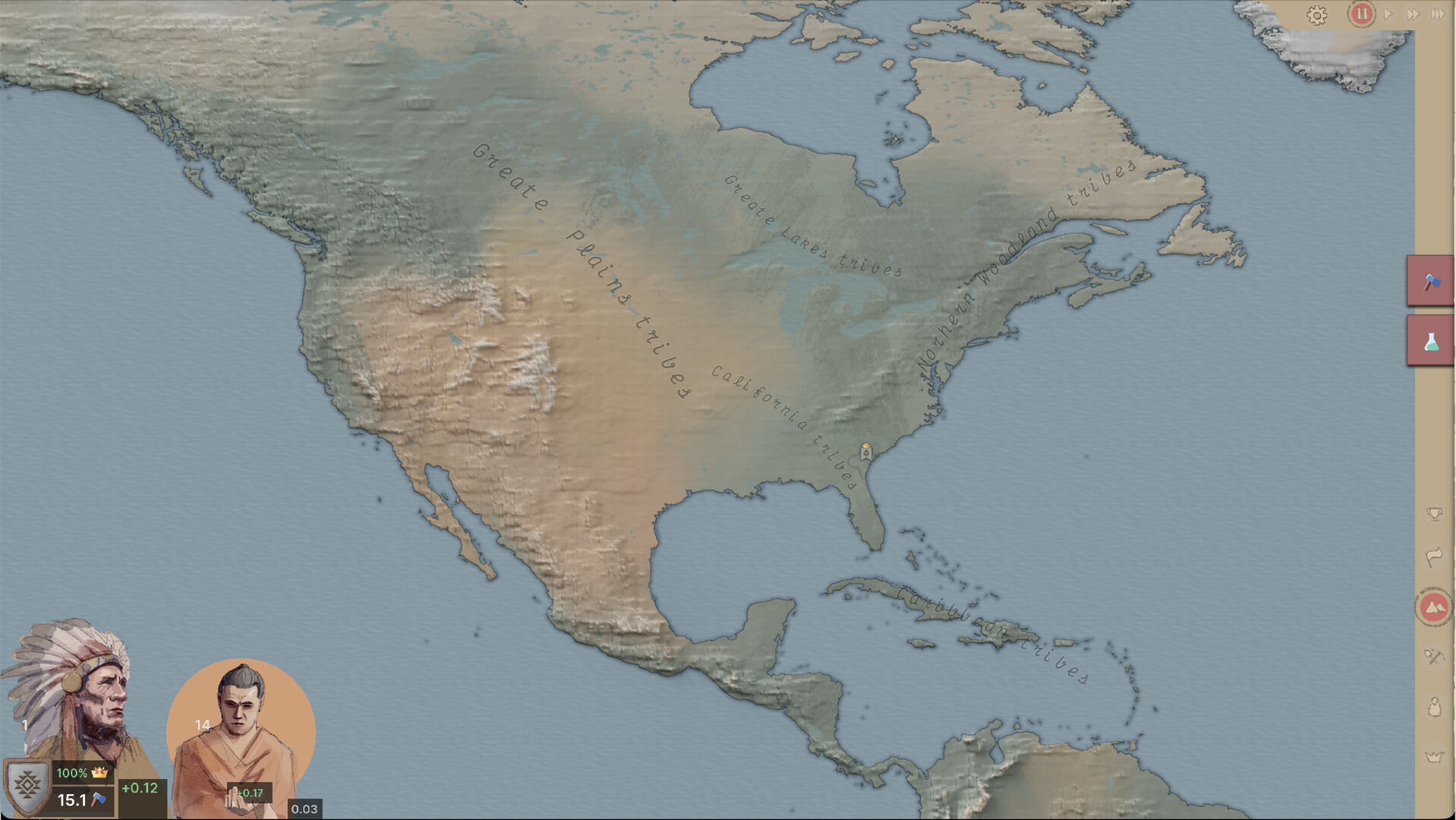
People are divided into social strata – classes: landowners, petty owners, capitalists, slaves, and workers. The player represents the will of the current ruling class (or rather, its ruling group) and can interact with other classes (e.g., tax, enslave, hire, etc.)
If the needs of a class aren't met, it accumulates discontent and may rebel. And within our own class, we must maintain the vertical power structure: build governance structures, ensure profits, otherwise a political crisis will brew – which could lead to provincial separatism or a coup
A political crisis could turn into a revolution if another class comes to power in the separatist territories. We have the opportunity to continue playing as rebels country (was it planned?)
The class picture varies across different eras: slaves can only work in simple jobs, while industrialisation, for example, will lead to the strengthening of not only our army, but also the capitalists who own factories – allowing them to lay claim to the role of the ruling class
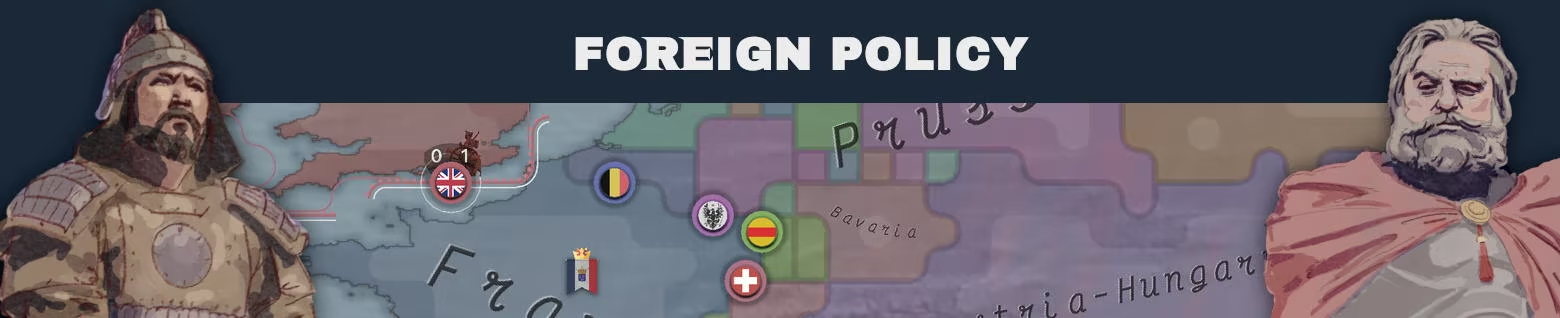
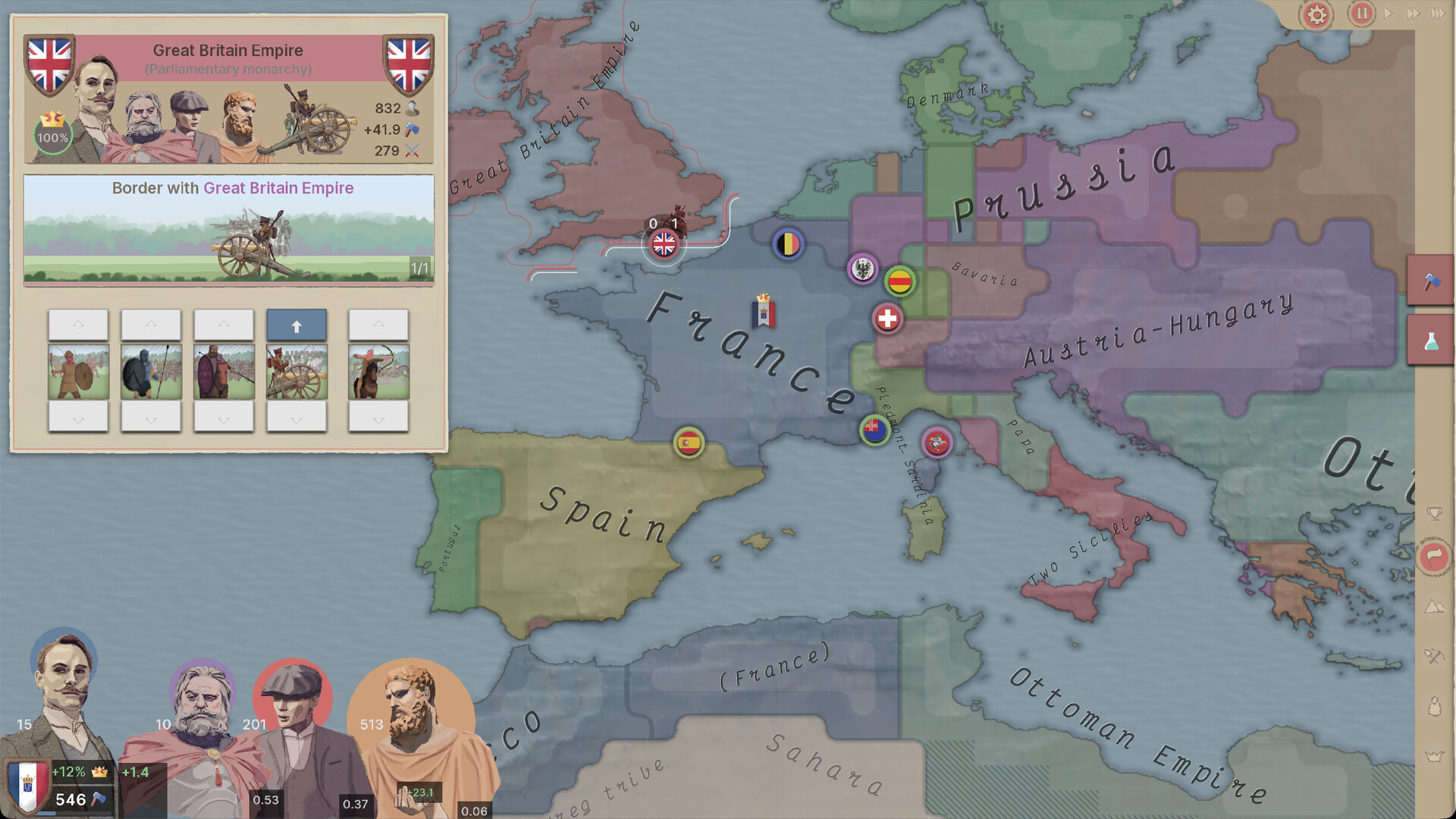
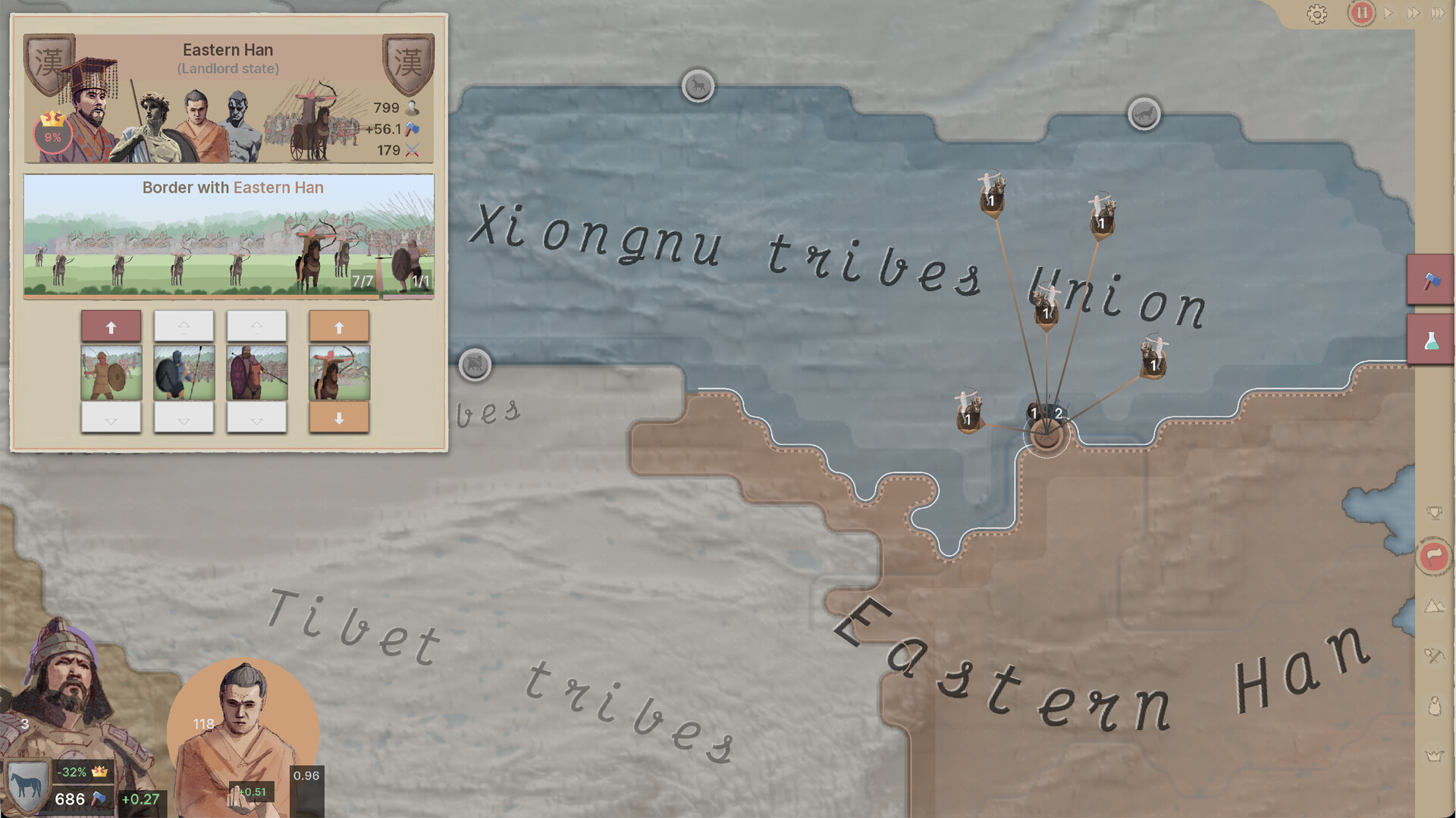
The game features a military system based on "fronts", between which we distribute our army. Army is our primary diplomatic resource: only a secure border can ensure a secure peace. You can control another country's trade, invest in it, and establish colonies
The broader our state, the more extensive its provinces – the entire territory must be within our control (with terrain and infrastructure taken into account in distances). Systems of control and legitimacy create a balance that resolves the snowball problem: expansion is always economically profitable, but not always politically stable. The stronger the core, the more extensive the provinces. Under developed capitalism, usually it's more profitable to invest into countries with cheap labor than to capture their territories
试玩版与发售信息
当前检查数据尚未确认有可用的试玩版。这并不代表该游戏从未提供过试玩版;请前往其 Steam 页面查看最新情况。
信息与图片:Steam · 最后检查 UTC