
1453: Fall of Constantinople
Demo available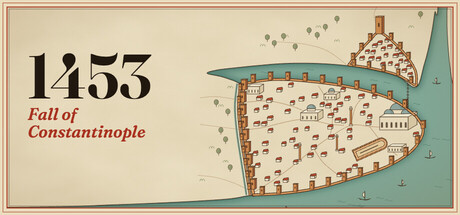


About the game
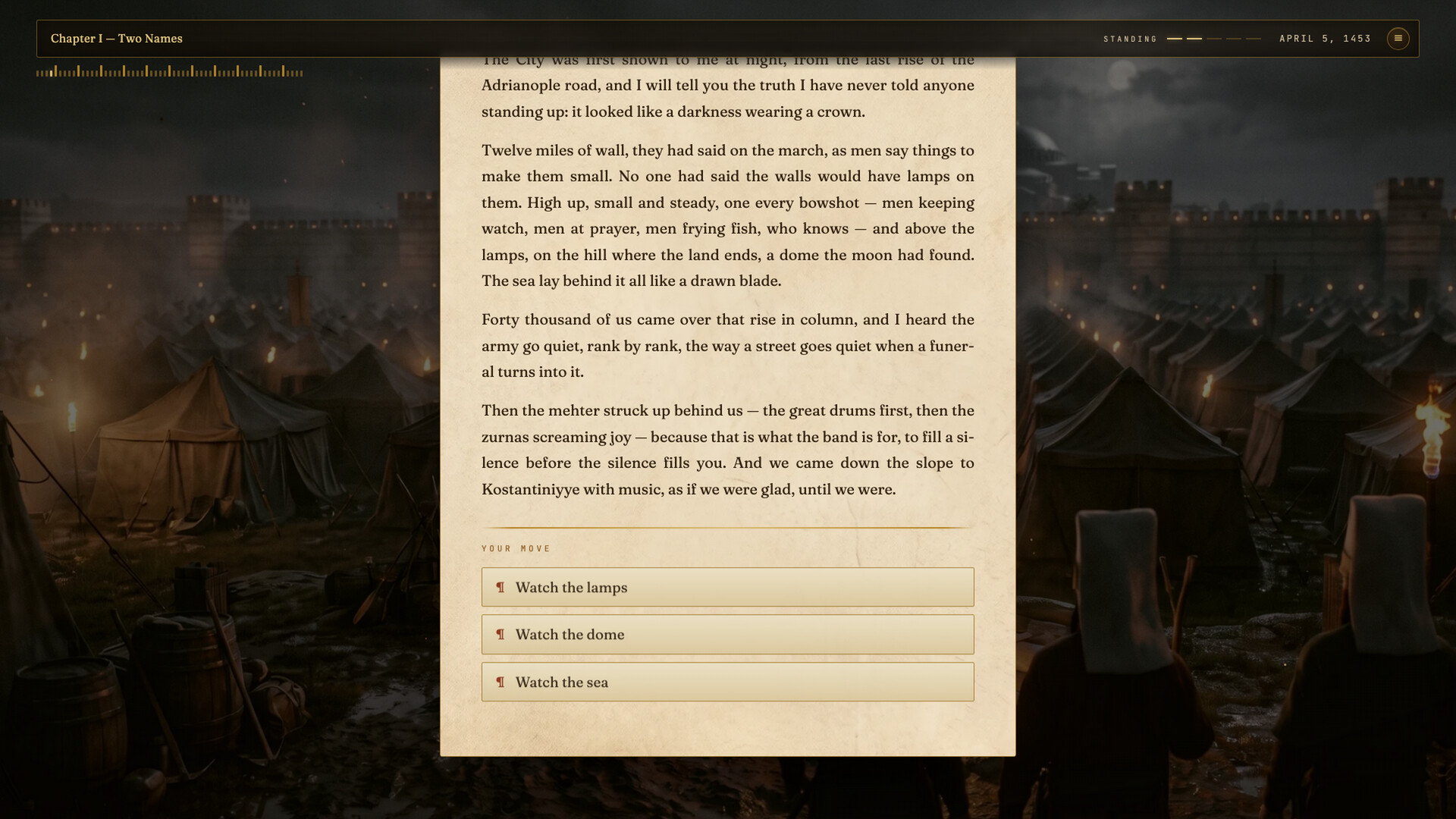
Venice, 1500. Anna Notaras takes down four testimonies of the fall of Constantinople: a janissary, a baker's daughter, an engineer and a noble, each living the same 53 days of the siege. What one witness does changes what the others can do. An illustrated, choice-driven historical novel.
Original Steam description
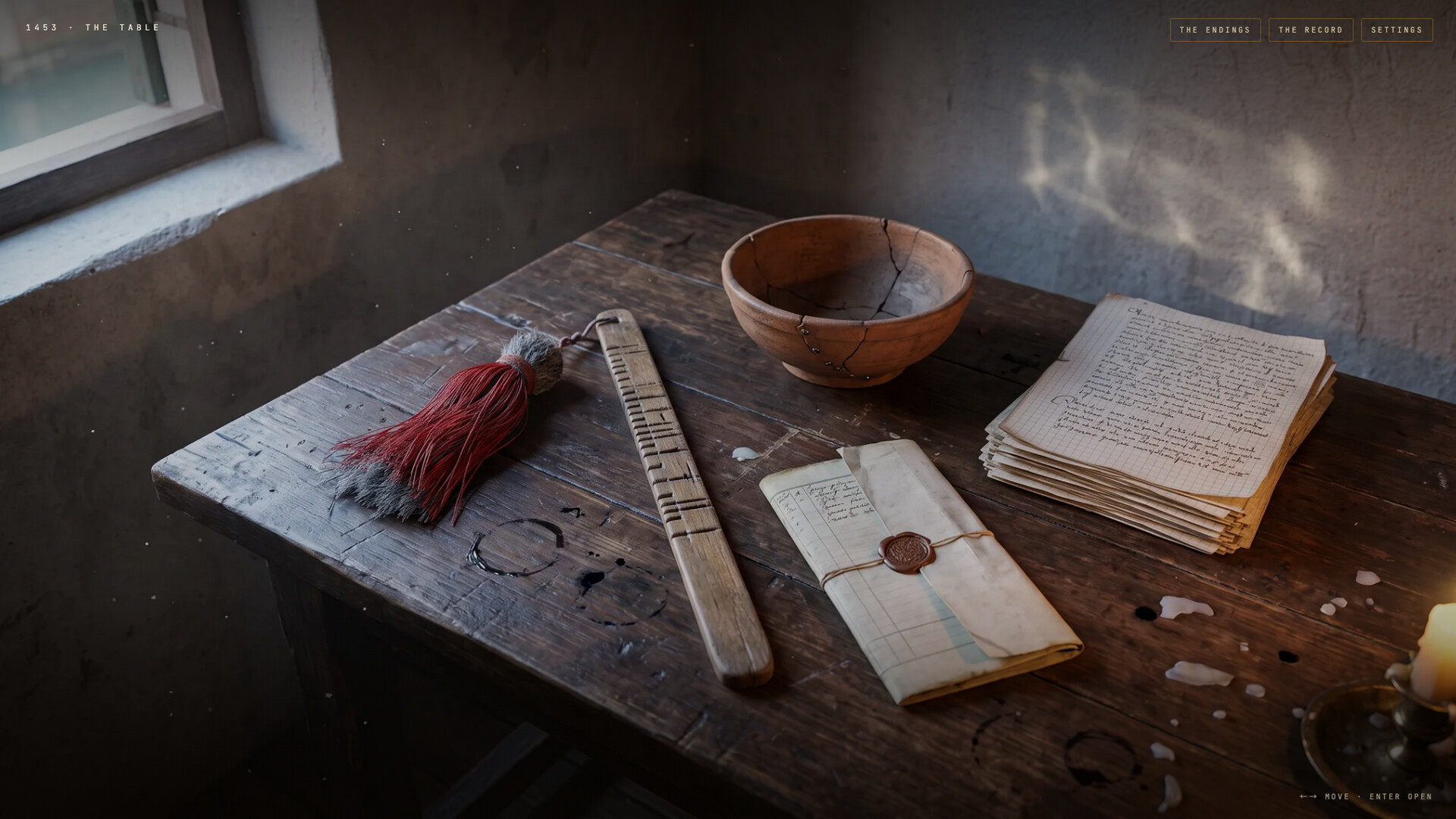
Venice, 1500. Four witnesses, four objects on a long table.
Anna Notaras is the daughter of Byzantium's last great duke. She left before the end and has spent fifty years ransoming the City's survivors. Now she is writing down what they saw. Each witness who sits at her table leaves something on it: a notched tally-stick, a clay water bowl cracked and riveted back together, a ledger page whose seal has never been broken, a tassel. Their accounts do not always agree. She writes them down anyway.1453: Fall of Constantinople is a choice-driven, illustrated historical novel about the fifty-three days of the siege, April 6 to May 29, told from both sides of the walls.
The testimonies
The Janissary. Born Greek, taken as a boy, now besieging the city his grandmother prayed toward. Anna's note on him: "He prays in two languages and lies in neither. Believe him about the wind."The Baker's Daughter. Keeps the ovens, the queues and the rumours of the Petrion quarter going while the bread runs out.
The Engineer. A foreign specialist in the war under the walls: tunnels, water bowls floated to hear the digging, a burning siege tower.
The Noble. Carries the emperor's secret census, sits in on the surrender embassies, and weighs the Church's gold for the mint.
All four live by the same fixed calendar, and how it ends is known. The choices are about who each of them is in the last days of May.
Where the stories cross
A mercy shown in one testimony becomes a sixth ending in another. A berth bought, or refused, at court becomes the boat a girl might board on the last morning. A finished testimony visibly changes scenes and endings in the ones you read after it.What the sources say
After every chapter the game shows where the scene comes from: an eyewitness diary, a later chronicle, a legend written down centuries afterwards, or that no source speaks to it. The sources codex flags every major event as attested, reported, legend or disputed.On the table
- Four routes with five or six endings each, twenty-two in all, inside Anna's frame story.
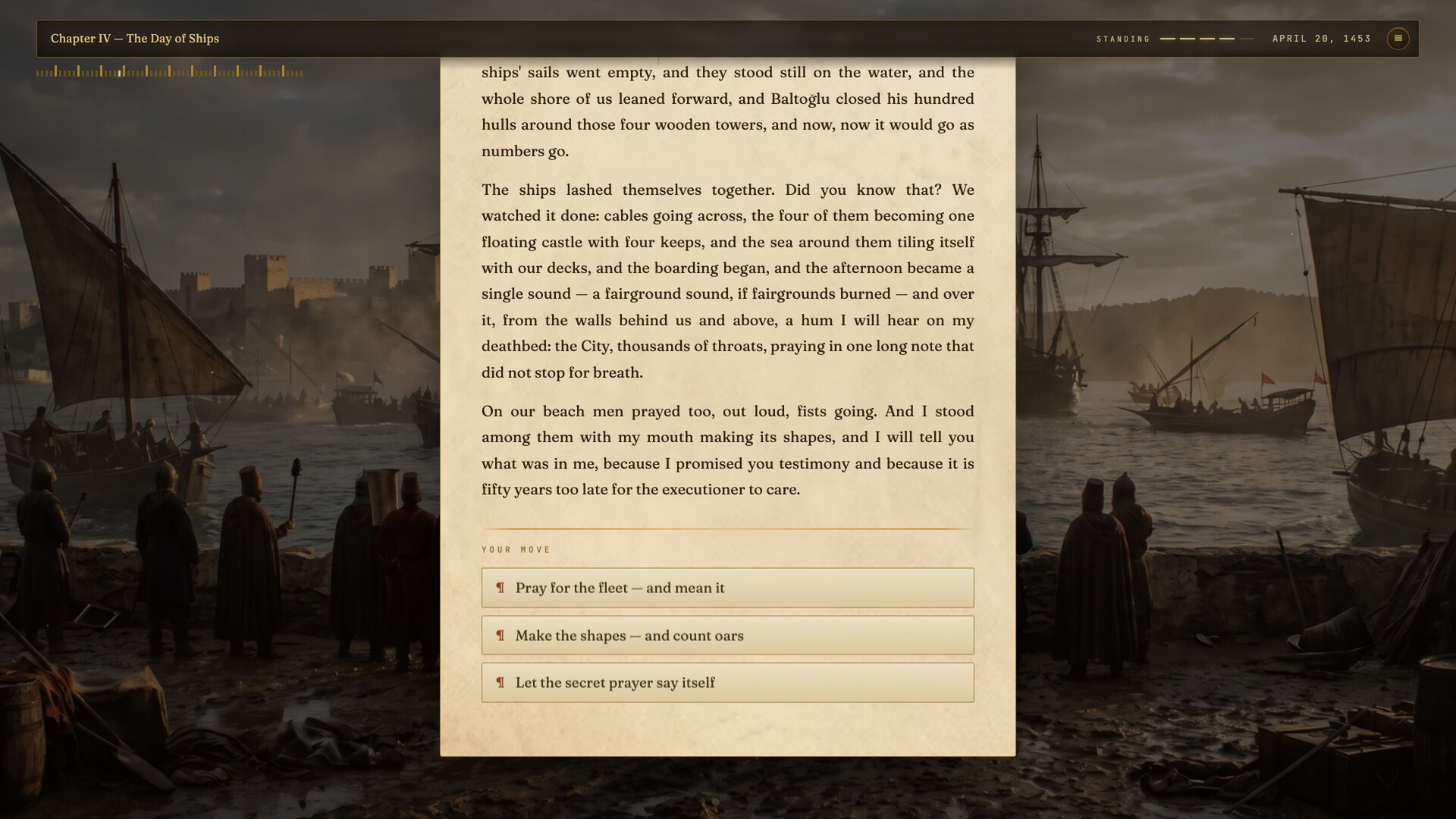
- Painted-realism scenes of the siege, with slow ambient motion behind the text.
- A score that moves between mehter rhythm and Byzantine chant as the story crosses the walls.
- Ottoman and Byzantine lives written with the same care. No side's ending is presented as the true one.
Images and music are AI-assisted with human editorial control; text and code are human–AI co-written.
Demo and release information
A Steam demo was found at the latest check. Confirm it is still available in your region on Steam before downloading.
Steam demo, playtest and Early Access: what is the difference?
Information & artwork: Steam · Last checked UTC